Barbados PM Mia Mottley, reaffirming Caribbean leadership in climate justice, economic sovereignty,


Prime Minister Hon. Mia Mottley wins historic 3rd term by a landslide in Barbadian election. 
Norris R. McDonald


By Norris R. McDonald | @sulfabittasnews

Barbados has spoken — decisively, confidently, and democratically. With a historic third consecutive electoral victory and a clean sweep of all 30 parliamentary seats, Mia Mottley and the Barbados Labour Party (BLP) have received one of the strongest democratic mandates anywhere in the contemporary world.


This result is not merely a domestic political milestone. It is a global statement. It affirms that justice-centered leadership wins, that sovereignty still matters, and that small states can shape big ideas. At a moment when climate catastrophe, debt bondage, and geopolitical coercion threaten the very survival of vulnerable nations, Barbados has reaffirmed its commitment to a radically different path — one rooted in climate justice, economic self-determination, and principled Caribbean solidarity.


Democracy in Its Truest Form

Democracy is not defined by how many opposition benches exist in a legislature. Democracy is defined by whether people are free to choose and whether that choice is respected.


Barbadians went to the polls. Barbadians evaluated leadership. Barbadians renewed their mandate. That is democracy in action.


Attempts to question this outcome reveal a deeper discomfort: the idea that Caribbean people can independently choose a political direction that does not align with imperial preferences. A politics built around client-state opposition parties designed primarily to serve external interests is not democracy in its truest sense. It is managed consent.


Barbados has chosen sovereign democracy — governance anchored in national interest and popular will, not foreign approval. The scale of the victory reflects political clarity, not democratic deficiency.


A Global Victory for Climate Justice

Mottley’s re-election strengthens the most influential climate-justice voice to emerge from the Caribbean in generations.


Her central argument is both simple and transformative. The industrialized world built its wealth on fossil-fuel-driven development. The Global South now bears the harshest consequences of that development. Therefore, climate finance is not charity; it is owed.

This reframing has altered the global conversation. Climate policy is no longer merely about emissions targets and pledges. It is increasingly about responsibility, restitution, and repair. 


Barbadian Prime Minister, Hon. Mia Mottley, is the voice of the economically oppressed.


Under this philosophy, Barbados has championed reforms to international lending systems, new approaches to debt sustainability for climate-vulnerable states, and large-scale financing mechanisms for adaptation and resilience.


Through persistent diplomacy, Barbados has positioned itself as a moral superpower — small in territory, immense in influence. Mottley has demonstrated that moral clarity, when combined with technical competence and strategic persistence, can move institutions that once seemed immovable.


Economic Justice as the Foundation of Climate Survival

Climate justice cannot exist without economic justice. Mottley’s vision explicitly links environmental survival to structural economic reform.


Her development philosophy challenges the colonial-era model in which Caribbean economies are structured primarily around tourism, offshore finance, and external extraction. Instead, Barbados is asserting the right to design an economy oriented toward human dignity, resilience, and self-reliance.


This means prioritizing renewable energy to reduce dependence on imported fossil fuels. It means investing in green and blue economies that generate domestic value rather than exporting raw potential. It means embracing digital governance to cut bureaucratic waste and improve service delivery. It means treating debt sustainability not as an abstract accounting exercise but as a matter of human survival.


In this framework, development is not about pleasing markets. It is about protecting people.


A Caribbean Rebuke to Imperial Client Politics

Mottley’s third-term mandate strengthens a Caribbean foreign policy rooted in non-alignment, de-escalation, and regional solidarity.


In the context of tensions surrounding Venezuela and renewed geopolitical maneuvering in the region, Barbados has consistently argued that the Caribbean must not become collateral damage in great-power conflict. This position represents a clear rebuke to approaches that rely on deepening military dependency and automatic alignment with U.S. strategic priorities — including positions advanced by some leaders in Trinidad and Tobago and elsewhere.

Barbados is advancing a different logic: peace is security, sovereignty is stability, and development is the real defense.


Standing with Cuba, Standing with Humanity


Rather than militarizing Caribbean space, Mottley’s posture emphasizes diplomacy, mediation, and regional coordination. It asserts that Caribbean nations are not chess pieces on someone else’s board, but sovereign actors with their own interests and their own future to protect.


Barbados’s moral clarity extends to its opposition to the long-standing U.S. embargo on Cuba.


Despite over 60 years cruel economic sanction, Cuba has built a world class best medical system. 


Sanctions do not punish governments in any meaningful sense. They punish ordinary people. They restrict access to medicine, technology, food, and economic opportunity. They weaponize suffering as a policy tool. 

Mottley’s stance aligns with the Caribbean’s deepest tradition: we do not abandon each other under siege. This is not ideological romanticism. It is practical humanism rooted in shared history, shared struggle, and shared survival.


By maintaining this position, Barbados reinforces the principle that Caribbean foreign policy must be guided by conscience and community, not coercion.


Why This Victory Matters Beyond Barbados

For the Caribbean, Mottley’s victory strengthens a collective voice demanding fairer global rules and greater regional self-determination.


For the Global South, it confirms that justice-oriented leadership can survive — and even thrive — in electoral politics.


For young people worldwide, it offers proof that politics can still be about moral purpose rather than mere power management.


Barbados has demonstrated that small states can influence global policy, that elections can reward principle, and that anti-imperialist leadership can be popular.

That is a dangerous idea for empire. It is a hopeful one for humanity.


The Caribbean Bottom Line

Mia Mottley’s third term is not simply continuity. It is confirmation.

Confirmation that people recognize authentic leadership.
Confirmation that climate justice is now mainstream politics.
Confirmation that Caribbean sovereignty is alive and rising.


Barbados is not just voting for a government. Barbados is voting for the kind of world it believes is possible.


And in doing so, it is helping to build that world.


And let it be said plainly, without apology: 


The age of whispering in the corridors of empire is over. The age of speaking with our own voice has arrived.


Barbados, through Mia Mottley’s leadership and the overwhelming mandate of its people, has chosen dignity over deference, justice over obedience, and sovereignty over servitude. That choice is not radical. It is natural. It is historical. It is necessary.


Those who recoil at this moment do not fear dictatorship. They fear independence. They do not fear authoritarianism. They fear a Caribbean that refuses to kneel.


Barbados has lit a torch.
The Caribbean is rising.
History is moving.


Forward with justice. 

Forward with sovereignty! 

Forward with people power!


AUTHOR

Norris R. McDonald
Author, writer and cultural commentator exploring Afro-Caribbean heritage, identity, and global influence.

👉 Want more stories on Afro-Caribbean culture, history, and global influence? Follow Afro Carib World for deeper insights.


Africa Rises Again as Tyla Wins Second Grammy


African music continues to gain global recognition as artists from across the continent dominate international award stages. From Afrobeats to Amapiano, African creativity is reshaping the global music industry and strengthening the cultural influence of the African diaspora worldwide.

By Norris R. McDonald

 African singer Tyla has cemented her place as one of Africa’s biggest global music stars after winning her second Grammy Award for Best African Music Performance, further extending her record-breaking rise on the world stage.

The 24-year-old Johannesburg-born artist claimed the prize for her hit song “Push 2 Start,” beating a competitive field that included Nigerian superstars Ayra Starr, Burna Boy, and Davido, as well as Ugandan singer Eddy Kenzo. The ceremony took place in Los Angeles, where Tyla expressed pride in representing Africa internationally.

“This is insane, this is so insane! I’m just so lucky to be here, and I’m so proud to be African,” she said after the win. “I’m excited to see more of us over here.”

The award marks Tyla’s second consecutive Grammy victory in the category. She previously won in 2024 for her global smash “Water,” becoming the youngest African artist ever to win a Grammy.

From Viral Videos to Global Stardom

Tyla (born Tyla Laura Seethal, January 30, 2002) first gained major attention in 2021 with the music video for “Getting Late,” which portrayed her as a princess in a visual PAPER magazine described as a “fairy tale.” The video went viral in South Africa and drew early international interest.

She followed up with “Overdue,” featuring Kooldrink and DJ Lag in 2021, and “To Last” in 2022. Her fourth single, “Been Thinking,” released in 2023, garnered millions of views on YouTube—setting the stage for a global breakthrough.

That breakthrough came with “Water,” a sultry popiano track blending pop with amapiano, a South African dance music genre. Featuring the lyrics “Make me sweat, make me hotter / Make me lose my breath, make me water,” the song exploded on TikTok, driven by a viral clip of Tyla pouring water over herself during a bacardi-inspired dance routine choreographed by Lee-ché.


“Water” surged into the Billboard Top 10, earning Tyla the record as the highest-charting African female solo artist in history.

Albums, Awards, and Global Recognition

In 2024, Tyla won the inaugural Grammy Award for Best African Music Performance at the 66th Grammy Awards and released her self-titled debut album, Tyla. The project debuted at number 24 on the Billboard 200, later followed by a deluxe edition titled Tyla+.

She also delivered standout performances, including an appearance at the 2024 BET Awards in Los Angeles, further solidifying her crossover appeal.

Though Tyla initially announced plans for a 2024 international tour, she later canceled the run due to an injury.

A New Face of African Music

Signed to Epic Records in 2021, Tyla has been widely praised for popularizing African music and dance trends worldwide. She has described her sound as “popiano,” a fusion that has helped bring amapiano to global audiences.

Once briefly considering a future in mining engineering, Tyla instead pursued music relentlessly—posting songs online and reaching out across the industry until she caught the attention of Brandon Hixon, co-founder of New York-based FAX Records, who helped launch her professional career.

With two Grammys, Billboard records, and global recognition to her name, Tyla continues to redefine what’s possible for African artists on the world stage. 

Tyla Dazzles at the Grammy!


AUTHOR

Norris R. McDonald
Author, writer and cultural commentator exploring Afro-Caribbean heritage, identity, and global influence.

👉 Want more stories on Afro-Caribbean culture, history, and global influence? Follow Afro Carib World for deeper insights.


Ghetto Life: Struggles, Survival, and Hope in Kingston, Jamaica 

BLACK HISTORY MONTH FEATURE The Historical Significance of Michael Jackson’s Contribution to Black History, Culture, and Music ...and... Norris R McDonald on ...The Myth of The Black Ancestral Curse!


BLACK HISTORY MONTH FEATURE
The Historical Significance of Michael Jackson’s Contribution to Black History, Culture, and Music

By Norris R. McDonald, DIJ,CRT

Sulfabittas News Syndicate


Black America, Resistance, and Cultural Assertion

Norris R. McDonald
The 1960s and 1970s marked a defining period in Black American history. It was an era shaped by racial segregation, violent repression, and a determined struggle for civil rights. Black assertiveness flourished in language, literature, politics, music, and the arts, even as white supremacy sought to suppress Black advancement. During this time, Black identity itself became an act of resistance.

Michael Jackson


James Brown’s declaration, “I’m Black and I’m proud,” captured the spirit of a people refusing invisibility. Music became more than entertainment; it was a political and cultural battlefield. It was within this turbulent social and historical context that Michael Jackson emerged, not merely as a child prodigy, but as a future Black cultural icon whose global influence would transcend race, nation, and generation.


The Civil Rights Context of Michael Jackson’s Rise

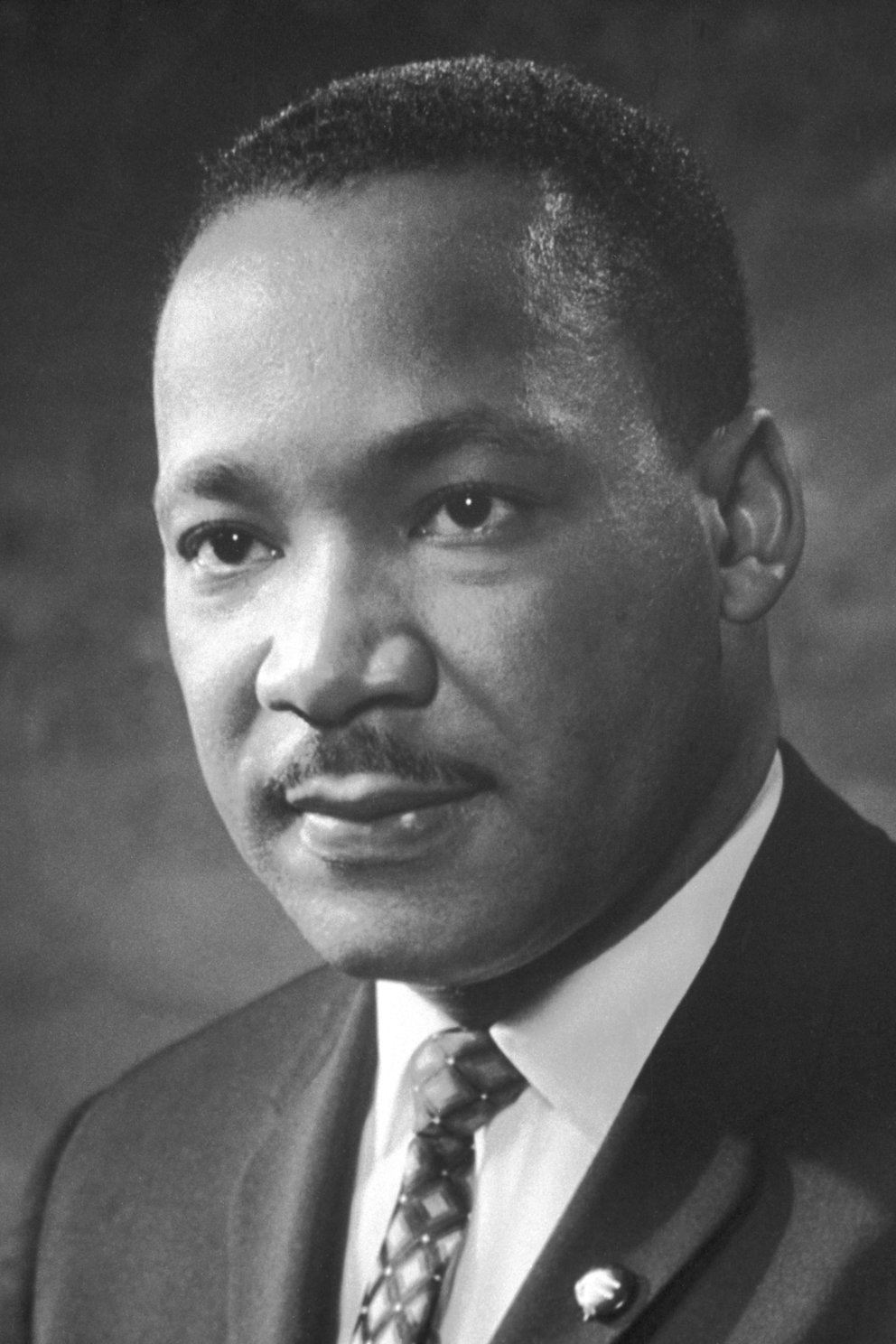
The civil rights movement defined the moral struggle of mid-20th-century America. Black people faced police brutality, public lynchings, and systemic exclusion. Leaders such as Dr. Martin Luther King Jr. stood at the forefront of the fight for justice, while countless unnamed individuals paid the ultimate price for demanding dignity.


Dr. Martin Luther King Jnr
Michael Jackson’s rise to fame must be understood against this backdrop. As a young Black boy entering a predominantly white entertainment industry, his success carried immense symbolic weight. His presence on national television, radio, and global stages challenged deeply entrenched racist stereotypes about Black capability, talent, and humanity.


The Jackson 5 and Breaking Racial Barriers

The emergence of The Jackson 5 in the late 1960s represented a cultural breakthrough. In a racist era still haunted by the murder of Emmett Till and the violent suppression of Black resistance, five Black brothers from Gary, Indiana captured the hearts of America.


Michael Jackson, alongside Jackie, Tito, Jermaine, Marlon, and later Randy, helped redefine how Black artists were perceived. Their talent, professionalism, and mass appeal disrupted long-standing racial hierarchies within the music industry. Janet Jackson would later continue this legacy, achieving her own extraordinary success, further cementing the Jackson family’s historical impact on Black culture.

The Jackson 5


Their achievements helped dismantle myths imposed on Black people and demonstrated, powerfully, that excellence could not be confined by racism.


Michael Jackson as a Black Cultural Lighthouse

Michael Jackson evolved into more than a superstar; he became a cultural lighthouse. His music, dance, and visual artistry reflected the possibilities of Black genius in a world determined to limit it. Like earlier trailblazers such as Sammy Davis Jr. and Sam Cooke, Michael used his platform to speak on behalf of Black artists and to challenge discriminatory industry practices.


As one writer noted, Michael Jackson participated in the civil rights tradition by advocating for fairness and opportunity within the music business. His success illuminated pathways for others, making it easier for future generations of Black performers to gain access to radio, television, and global markets.


Music as Resistance and Affirmation

Michael Jackson’s work emerged from a “boiling pot” of cultural and social ferment. His success unfolded amid tidal waves of injustice, yet his music carried joy, unity, and affirmation. Through rhythm, melody, and movement, he strengthened Black pride and self-esteem, particularly among young people.

His achievements were shared victories within the Black community. Each milestone represented progress not only for Michael Jackson, but for a people historically denied recognition. His global influence demonstrated that Black creativity could command the world’s attention without enduring erasure.


A Global Black Legacy

Michael Jackson’s impact extended far beyond the United States. Though he never performed in the People’s Republic of China during his 1987 visit, his influence remains deeply embedded in global youth culture. Fans like Chinese performer Wang Jingyuan, who dedicates his craft to honoring Michael’s artistry, demonstrate how Jackson’s spirit lives on worldwide.


This global resonance underscores the universality of Black cultural expression. Michael Jackson became a bridge between cultures, proving that Black artistry speaks a universal language of rhythm, emotion, and humanity.


Black Excellence Amid Tragedy

Despite the personal pain, media scrutiny, and tragedy that marked the later years of his life, Michael Jackson’s Black legacy remains unshaken. His creative genius as a songwriter, choreographer, singer, and performer is unmatched. Rolling Stone Magazine famously described him as “a Black superhero,” acknowledging his transformative role in world music and culture.


In death, his music transcended controversy and returned to its pure purpose: spreading joy, hope, and connection.


Michael Jackson’s Place in Black History

Michael Jackson stands alongside figures such as Frederick Douglass, Sojourner Truth, Marcus Garvey, Dr. Martin Luther King Jr., and Bob Marley—individuals who served as cultural and spiritual lighthouse keepers for Black people worldwide. Through excellence in the arts, he helped guide generations toward dignity and self-belief.


During Black History Month, Michael Jackson must be recognized not only as the King of Pop, but as a vital contributor to Black history. His life and legacy affirm a powerful truth: despite oppression, the Black spirit cannot be crushed, and Black brilliance will always find a way to shine.


AUTHOR

Norris R. McDonald
Author, writer and cultural commentator exploring Afro-Caribbean heritage, identity, and global influence.

👉 Want more stories on Afro-Caribbean culture, history, and global influence? Follow Afro Carib World for deeper insights.

BOOKS

The Myth of the Black Ancestral Curse: Religion, Race, and the Psychological Legacy of Slavery!


Norris R. McDonald, DIJ CRT, Author, Economic Journalist, Poet, & Human Rights Activist 

Myth of the Black Ancestral Curse is a critical study of  phycological legacies of slavery and the role religion and race plays in reenforcing racist stereotypes. 

This book:

For centuries, Black people have been told that their suffering is divine punishment—ordained by God and passed down through a mythical “ancestral curse.”

In this powerful, eye-opening work, Norris R. McDonald, DIJ, dismantles one of the most enduring and damaging lies in Christian history: the so-called 
Curse of Ham. From the hymnals of colonial churches to the halls of modern academia, this myth has been used to justify slavery, colonization, and systemic racism.

With clarity, historical depth, and spiritual conviction, McDonald traces how scripture was distorted, how Black history was erased, and how liberation must begin with truth.

Drawing from the Bible, classical history, and Black theological thought, this short but impactful book challenges readers to confront religious indoctrination, reclaim their dignity, and break spiritual chains that have lasted for generations.
Whether you're a student of theology, an activist for racial justice, or a seeker of historical truth—
The Myth of the Ancestral Curse will inspire, inform, and empower you.


BREAKING NEWS

Afro-Caribbean Culture, Garvey’s Vision and the fight for self-determination

Why Garvey's Vision Still Matters Today By Norris R. McDonald Afro Carib World, Updated, June 16, 2026 Afro-Caribbean culture emerged f...