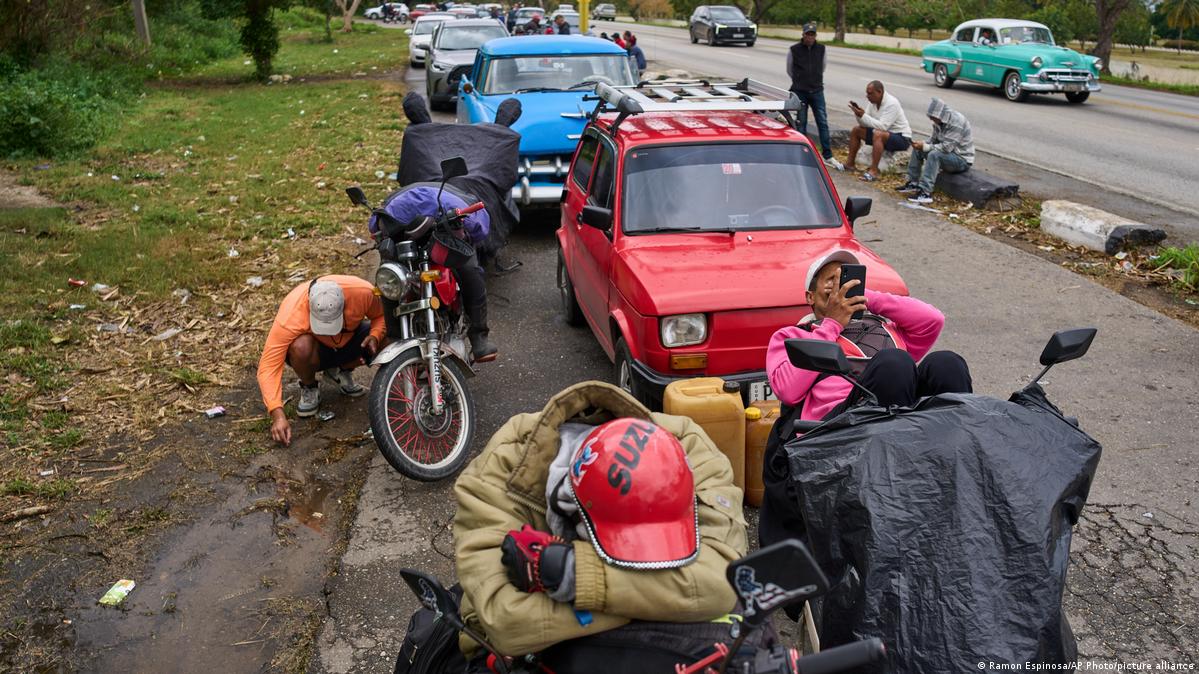
President Trump escalates economic embargo as Cuba faces its worst energy crisis in decades!

When energy becomes a weapon, suffering becomes policy!

President Donald Trump


Kingston, Jamaica — @sulfabittas News

Breaking news on Cuba’s deepening energy crisis as U.S. sanctions block Venezuelan and Mexican oil supplies, trigger jet fuel shortages and rolling blackouts, and spur international responses from Mexico, China, and Russia. Latest updates, analysis, and impact for Cuba, Caribbean travel and global geopolitics.


Latest Verified Developments

• U.S. Oil Blockade and Tariffs Intensify Pressure
The Trump administration’s intensified sanctions and tariff threats have effectively stopped Venezuela — Cuba’s main oil supplier — and pressured Mexico to curb shipments, causing severe fuel shortages.

• Jet Fuel Shortages Halt Flights
Cuba announced aviation fuel shortages at nine airports, leaving airlines unable to refuel on the island until at least mid-March and forcing flight cancellations and reroutes that hit tourism hard.

• Humanitarian Aid and Geopolitical Response
Mexican navy ships carrying humanitarian food aid have arrived to ease shortages, even as Mexico walks a diplomatic tightrope with Washington. China vows to assist Cuba with supplies, and Russia plans fuel shipments that could defy U.S. tariffs.


U.S. imposed economic hardships have worsened Cubans daily life. 


President Trump’s latest sanctions escalate decades-old U.S.–Cuba tensions and follow broader U.S. moves affecting Venezuela’s leadership and oil industry — a strategy with far-reaching consequences for Cuban civilians, tourism, and regional geopolitics.


International responses are mounting: Mexico provides vital aid, while China and Russia reject what they call unilateral U.S. pressure. The crisis now threatens not just fuel systems but food, healthcare and civil stability across the island.


**********

BOOKS BY CARIBBEAN AUTHORS... 

PEENIE WALLIE: THE GLOW OF A FOOL'S LIGHT!: The true life story of a young boy misunderstood but destined to shine


By Norris R. McDonald 


The Jamaican African Coromantee Maroon spiritual ancestors still continues to shine a bright light forward like "Peenie Wallie's" fireflies! "Peenie Wallie" setting is in the rural, St. Mary, Jamaica community where the land tells stories of hope, that emerges from the souls of Black Jamaican people. "Peenie Wallie" explores themes such as: rural poverty, internal migration, hardships, sacrifice, self-motivation, self-development, education, love, kindness, hope, traditions and community spirit versus selfishness. The book tells this story through the eyes of the protagonists:

- Aunt Sissy
- Peenie Wallie and his fireflies
- Mass Moses, a Maroon spiritual leader
- Sheldon, their benefactor.

This busy-buzzing life of the hard-working people of Epsom District, St. Mary, reflects the hope and joy for a prosperous future for the Jamaican people.

The small village of Epsom, once a symbol of hardship, had transformed into a thriving community thanks to the education programs and opportunities he had championed. Many of the village’s children went on to achieve greatness, inspired by his example. "The Glowing House of Epsom" and Peenie Wallie legacy became a cultural landmark, visited by people from all walks of life. Inside its walls, photographs and awards told the story of Peenie Wallie’s journey and that of Aunt Sissy.

The lush gardens outside were filled with blooming flowers—a tribute to the natural picturesque beauty of Epsom, St Mary that had brought Peenie Wallie and Aunt Sissy together and had shaped their ‘Sulfabittas’ life. Peenie Wallie’s fireflies became an enduring symbol of hope.

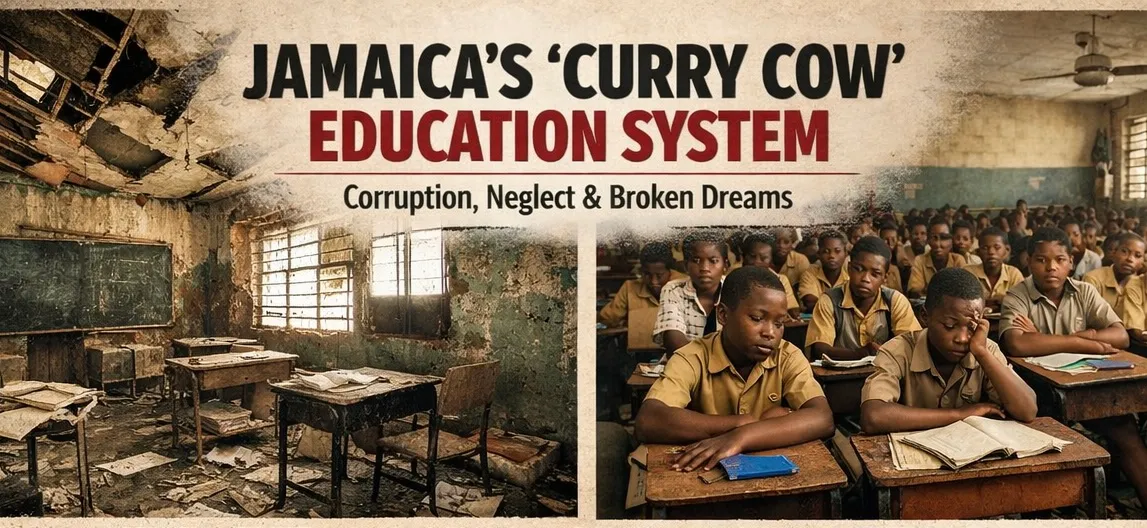
Jamaica’s Curry Cow Education: A Cultural Sovereignty Fight!


...Jamaica’s education crisis is rooted in corruption, colonial legacy, and mental slavery. Cultural sovereignty demands radical transformation now!

“We must emancipate ourselves from mental slavery, for though others might free the body, none but ourselves can free the mind.”

Marcus Garvey


By Norris R. McDonald, Sulfabittas News Syndicate @sulfabittas

There are few tragedies more enduring than an education system that systematically undermines the very people it claims to uplift. In Jamaica, where more than 11 per cent of the adult population remains functionally illiterate, the consequence is not merely academic failure but the slow burial of potential.

Generations of children are being consigned to low-wage labour, economic uncertainty, destroyed hopes and dreams.


Jamaica's political and business elites thrive while the education system collape.

This crisis is not the result of scarce resources; it is the outcome of deliberate mismanagement, corruption, and a colonial mind-set that continues to shape the Jamaican society.

ELITISM, CULTURAL AND SOCIAL STAGNATION
Let us be clear: this is not accidental. From its inception, Jamaica’s education system was designed to serve a narrow elite while disciplining the majority into obedience. As Professor Errol Miller and others have long demonstrated, decades of reform have failed to close the gap between the privileged and the working class.

Instead, schooling continues to socialize our children into submission – training them to fit neatly into a global capitalist order where their creativity is extracted, their  labour exploited, and their aspirations contained.

My friends, the government’s endless parade of trust-deficit “solutions” has produced little beyond press releases and procurement contracts while fostering corruption.

Despite high enrollment, a United Nations study has found Jamaica’s learning outcomes to be dangerously weak. Only about 20 per cent of teachers are university graduates, and digital literacy remains an afterthought in a world increasingly defined by technology. Meanwhile, we continue to fund a system that reliably produces illiteracy, underemployment, and social stagnation.

We are producing societies with perpetual deep rooted poverty and social stagnation. 


A CORRUPTION-DRIVEN ‘CURRY COW’ EDUCATION SYSTEM

The crisis in education cannot be separated from Jamaica’s broader political economy. Government officials routinely cite budget constraints to justify chronic underinvestment, but this explanation collapses under scrutiny.


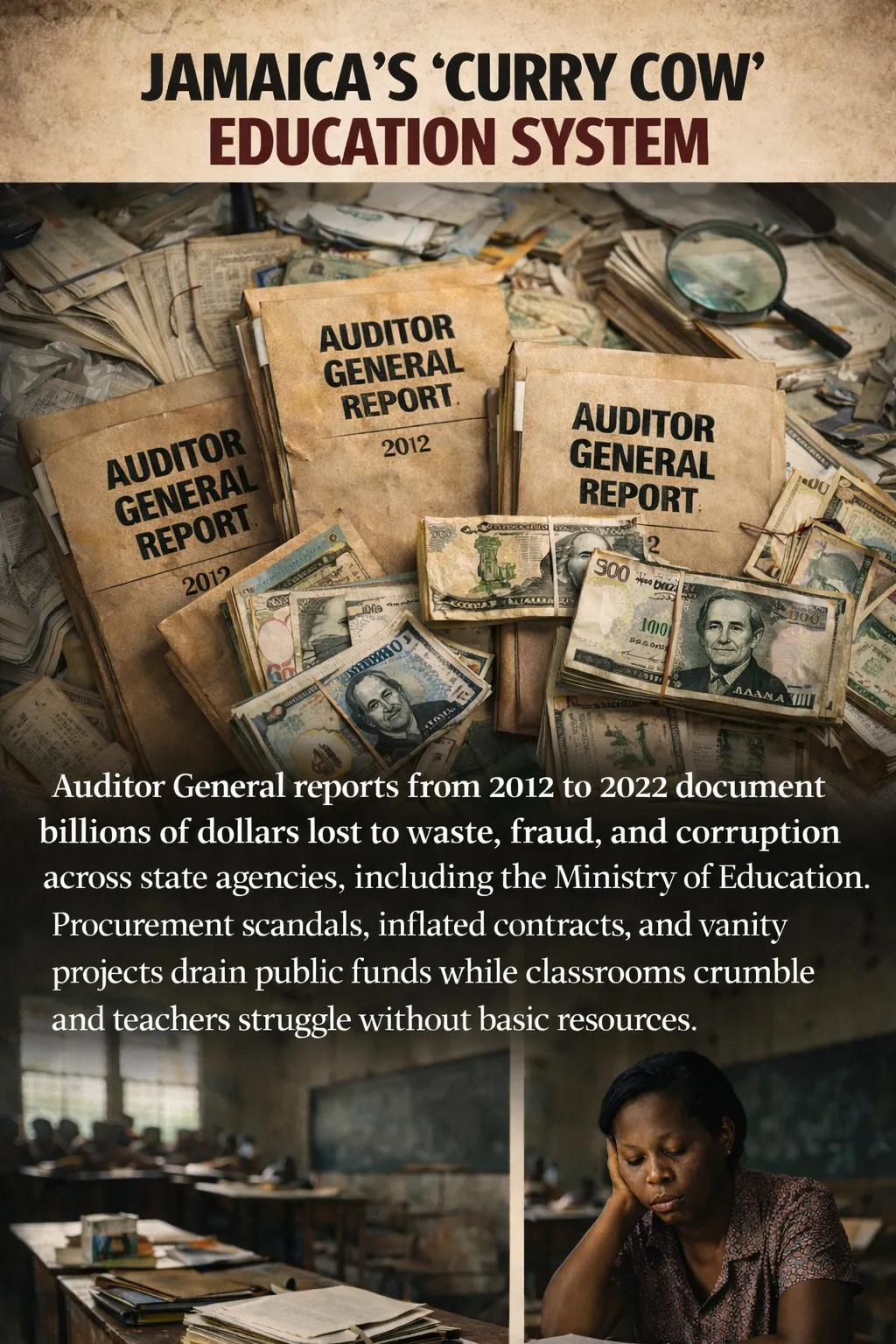
The problem is not scarcity; it is priority. Auditor General reports from 2012 to 2023 document billions of dollars lost to waste, fraud, and corruption across state agencies, including the Ministry of Education. Procurement scandals, inflated contracts, and vanity projects drain public funds while classrooms crumble and teachers struggle without basic resources.


This is a government that finds ample money for foreign travel, consultants and ceremonial excess, yet pleads poverty when asked to invest in children. Education has become a “curry cow” – a lucrative feeding trough for political insiders rather than a vehicle for national development.


Despite the rhetoric of reform, outcomes worsen, inequality deepens, and the gulf between elite institutions and underfunded public schools grows ever wider.


At its core, this dysfunction reflects the logic of capitalism itself. Jamaica’s education system is not designed to cultivate critical thinkers, innovators, or self-determining citizens. It is engineered to produce a compliant workforce for a global economy that thrives on cheap labour and limited horizons. Western capitalist nations preach meritocracy and opportunity, yet actively structure education to reproduce class hierarchies at home and dependency abroad. Minds are not developed; they are conditioned.


CUBA: A GOOD EXAMPLE AMERICA LOVES TO HATE


Contrast this with Cuba – a country relentlessly demonized and economically strangled by the United States and its allies for over six decades.


Despite an unforgiving blockade and material scarcity, Cuba has built one of the most successful education systems in the world, boasting near-universal literacy and strong outcomes across disciplines. This achievement is not rooted in excess wealth or cutting-edge technology but in political will.


Cuba consistently invests between 10 and 12 per cent of its GDP in education, prioritizing human development over profit. Education is treated as a public good and a cornerstone of sovereignty, not a commodity to be rationed or privatized.


In doing so, Cuba exposes the lie at the heart of capitalist ideology: that poverty, rather than policy, explains educational failure.


While Jamaica squanders public funds and bends to the dictates of international financial institutions, Cuba has built an education system that equips its people to participate in – and challenge – the global knowledge economy. Its success is not incidental; it represents a direct challenge to Jamaica’s, British inspired, colonial education system.


Cuba's educational system and outranks all developed, industrialized nations, including America. 


CREATIVITY, CULTURE AND NATIONAL SOVEREIGNTY


Cuba’s educational philosophy extends beyond the classroom. Creativity, culture, and community are central pillars of national development. Jamaica, by contrast, commodifies its cultural output — reggae, dancehall, athletics – without embedding creative education or economic ownership into the school system. 


Our global cultural influence has not translated into broad-based empowerment because we have failed to integrate creativity, technology, and heritage into a coherent educational strategy.


If Cuba can produce world-class doctors, engineers, scientists, and artists under siege, Jamaica has no excuse beyond political cowardice and ideological capture. Instead of cultivating national talent, our leaders defer to the IMF and their foreign masters. They therefore, wittingly or unwittingly, appear servile; pushing and implement policies that destroy the lives of black poor people and the middle class.


Loans replace vision, technical assistance substitutes for structural change.


My dear friends, what Jamaica requires is not more debt or donor-driven reform, but a fundamental reorientation of education toward cultural liberation rather than compliance.


EDUCATION MUST EMPOWER AND LIBERATE MINDS


Jamaica’s national hero Marcus Garvey warned that “a people without the knowledge of their past history, origin and culture is like a tree without roots.” He further reminded us that ‘we must emancipate ourselves from mental slaver to free our mind.’


Jamaica’s education system – shaped by colonial residue and enforced today through IMF and World Bank austerity – does precisely the opposite. It uproots African memory while institutionalizing mental captivity, training children for dependency rather than sovereignty.


Until education restores historical consciousness and rejects imperial supervision, political independence remains hollow, and liberation deferred.


Breaking free from colonialism and imperialism demands an education system rooted in black consciousness, cultural confidence, and national pride. Knowledge must be understood not merely as a means of survival, but as a weapon of resistance. 


We must abolish this education system that perpetuates ignorance, illiteracy and economic servitude and cultural enslavement.


Education must reflect the society it serves. 


If we desire a Jamaica that is just, sovereign, and self-determining, we must begin by transforming how and why we educate. 


Anything less is an endorsement of the cultural imperialist status quo.


That is the bitta truth.


[Norris R. McDonald is an author, economic journalist, political analyst, and respiratory therapist. Send feed back  miaminorris@yahoo.com.]


Barbados Re-Elects Mottley — Victory for Climate & Justice!

 Barbados delivers a historic mandate to Prime Minister Mia Mottley, reaffirming Caribbean leadership in climate justice, economic sovereignty, and people-centered democracy!

Prime Minister Hon. Mia Mottley wins historic 3rd term by a landslide in Barbadian election. 
Norris R. McDonald


By Norris R. McDonald | @sulfabittasnews

Barbados has spoken — decisively, confidently, and democratically. With a historic third consecutive electoral victory and a clean sweep of all 30 parliamentary seats, Mia Mottley and the Barbados Labour Party (BLP) have received one of the strongest democratic mandates anywhere in the contemporary world.


This result is not merely a domestic political milestone. It is a global statement. It affirms that justice-centered leadership wins, that sovereignty still matters, and that small states can shape big ideas. At a moment when climate catastrophe, debt bondage, and geopolitical coercion threaten the very survival of vulnerable nations, Barbados has reaffirmed its commitment to a radically different path — one rooted in climate justice, economic self-determination, and principled Caribbean solidarity.


Democracy in Its Truest Form

Democracy is not defined by how many opposition benches exist in a legislature. Democracy is defined by whether people are free to choose and whether that choice is respected.


Barbadians went to the polls. Barbadians evaluated leadership. Barbadians renewed their mandate. That is democracy in action.


Attempts to question this outcome reveal a deeper discomfort: the idea that Caribbean people can independently choose a political direction that does not align with imperial preferences. A politics built around client-state opposition parties designed primarily to serve external interests is not democracy in its truest sense. It is managed consent.


Barbados has chosen sovereign democracy — governance anchored in national interest and popular will, not foreign approval. The scale of the victory reflects political clarity, not democratic deficiency.


A Global Victory for Climate Justice

Mottley’s re-election strengthens the most influential climate-justice voice to emerge from the Caribbean in generations.


Her central argument is both simple and transformative. The industrialized world built its wealth on fossil-fuel-driven development. The Global South now bears the harshest consequences of that development. Therefore, climate finance is not charity; it is owed.

This reframing has altered the global conversation. Climate policy is no longer merely about emissions targets and pledges. It is increasingly about responsibility, restitution, and repair. 


Barbadian Prime Minister, Hon. Mia Mottley, is the voice of the economically oppressed.


Under this philosophy, Barbados has championed reforms to international lending systems, new approaches to debt sustainability for climate-vulnerable states, and large-scale financing mechanisms for adaptation and resilience.


Through persistent diplomacy, Barbados has positioned itself as a moral superpower — small in territory, immense in influence. Mottley has demonstrated that moral clarity, when combined with technical competence and strategic persistence, can move institutions that once seemed immovable.


Economic Justice as the Foundation of Climate Survival

Climate justice cannot exist without economic justice. Mottley’s vision explicitly links environmental survival to structural economic reform.


Her development philosophy challenges the colonial-era model in which Caribbean economies are structured primarily around tourism, offshore finance, and external extraction. Instead, Barbados is asserting the right to design an economy oriented toward human dignity, resilience, and self-reliance.


This means prioritizing renewable energy to reduce dependence on imported fossil fuels. It means investing in green and blue economies that generate domestic value rather than exporting raw potential. It means embracing digital governance to cut bureaucratic waste and improve service delivery. It means treating debt sustainability not as an abstract accounting exercise but as a matter of human survival.


In this framework, development is not about pleasing markets. It is about protecting people.


A Caribbean Rebuke to Imperial Client Politics

Mottley’s third-term mandate strengthens a Caribbean foreign policy rooted in non-alignment, de-escalation, and regional solidarity.


In the context of tensions surrounding Venezuela and renewed geopolitical maneuvering in the region, Barbados has consistently argued that the Caribbean must not become collateral damage in great-power conflict. This position represents a clear rebuke to approaches that rely on deepening military dependency and automatic alignment with U.S. strategic priorities — including positions advanced by some leaders in Trinidad and Tobago and elsewhere.

Barbados is advancing a different logic: peace is security, sovereignty is stability, and development is the real defense.


Standing with Cuba, Standing with Humanity


Rather than militarizing Caribbean space, Mottley’s posture emphasizes diplomacy, mediation, and regional coordination. It asserts that Caribbean nations are not chess pieces on someone else’s board, but sovereign actors with their own interests and their own future to protect.


Barbados’s moral clarity extends to its opposition to the long-standing U.S. embargo on Cuba.


Despite over 60 years cruel economic sanction, Cuba has built a world class best medical system. 


Sanctions do not punish governments in any meaningful sense. They punish ordinary people. They restrict access to medicine, technology, food, and economic opportunity. They weaponize suffering as a policy tool. 

Mottley’s stance aligns with the Caribbean’s deepest tradition: we do not abandon each other under siege. This is not ideological romanticism. It is practical humanism rooted in shared history, shared struggle, and shared survival.


By maintaining this position, Barbados reinforces the principle that Caribbean foreign policy must be guided by conscience and community, not coercion.


Why This Victory Matters Beyond Barbados

For the Caribbean, Mottley’s victory strengthens a collective voice demanding fairer global rules and greater regional self-determination.


For the Global South, it confirms that justice-oriented leadership can survive — and even thrive — in electoral politics.


For young people worldwide, it offers proof that politics can still be about moral purpose rather than mere power management.


Barbados has demonstrated that small states can influence global policy, that elections can reward principle, and that anti-imperialist leadership can be popular.

That is a dangerous idea for empire. It is a hopeful one for humanity.


The Caribbean Bottom Line

Mia Mottley’s third term is not simply continuity. It is confirmation.

Confirmation that people recognize authentic leadership.
Confirmation that climate justice is now mainstream politics.
Confirmation that Caribbean sovereignty is alive and rising.


Barbados is not just voting for a government. Barbados is voting for the kind of world it believes is possible.


And in doing so, it is helping to build that world.


And let it be said plainly, without apology: 


The age of whispering in the corridors of empire is over. The age of speaking with our own voice has arrived.


Barbados, through Mia Mottley’s leadership and the overwhelming mandate of its people, has chosen dignity over deference, justice over obedience, and sovereignty over servitude. That choice is not radical. It is natural. It is historical. It is necessary.


Those who recoil at this moment do not fear dictatorship. They fear independence. They do not fear authoritarianism. They fear a Caribbean that refuses to kneel.


Barbados has lit a torch.
The Caribbean is rising.
History is moving.


Forward with justice. 

Forward with sovereignty! 

Forward with people power!


BREAKING NEWS

President Trump escalates economic embargo as Cuba faces its worst energy crisis in decades!

When energy becomes a weapon, suffering becomes policy! President Donald Trump Kingston, Jamaica — @sulfabittas News Breaking news on Cuba’s...